
Road Trip through Croatia: An Unforgettable Adventure through the Heart of the Balkans

Updated: Aug 5
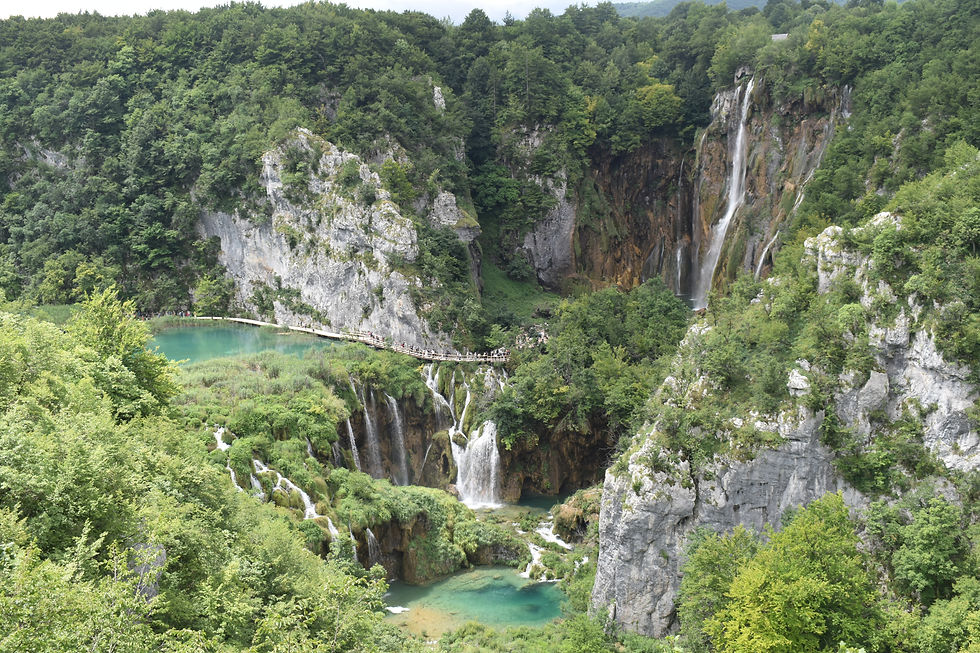
In July 2024, we packed our bags and set off for Croatia — a destination that had been on our list for some time. The goal was to explore this country full of nature and dreamlike landscapes. But what we found exceeded all expectations. Croatia is a true hidden treasure in the heart of the Balkans, one of those destinations that manages to have a little bit of everything: mountains, sea, ancient villages and natural parks.
Croatia in the context of the Balkans: between the Mediterranean and Central Europe
Croatia is situated at a fascinating crossroads between Central Europe, the Balkans and the Mediterranean. This geographical position has profoundly shaped its history, culture and identity.
It is part of the region known as the Balkan Peninsula, a diverse, sometimes unstable area, but rich in traditions, ethnicities and landscapes. Over the centuries, the Balkans have been the scene of empires, migrations, conflicts and alliances, and Croatia has experienced this crossroads of influences intensely:
Heir to the Austro-Hungarian Empire, it shares traits with countries such as Hungary, Austria, and Slovenia.
With a coastline facing the Adriatic Sea, it is culturally linked to the Mediterranean world and the former Republic of Venice, which dominated much of the coast.
It was also part of Yugoslavia, a federation that united several Balkan republics until its dissolution in the 1990s.
Croatian independence was achieved in 1991 after the War of Independence, which marked the beginning of a new era. Today, Croatia is a member of the European Union and NATO, while maintaining historical and cultural ties with its Balkan neighbours.
One country, several distinct regions

Did you know that, when viewed on a map, Croatia is shaped like a bird or a dragon? This almost poetic image helps us understand how the country is divided into several regions, each with its own unique identity:
The head is the Istrian peninsula in the north, near Slovenia and Italy. It is a region of hills, medieval villages and excellent cuisine (truffles, wines and seafood).
The body is the region of Central Croatia, with a mixture of Austro-Hungarian heritage and modernity, where Zagreb, the vibrant and lively capital, is located. This region is home to several mountains, dense forests and dreamlike lakes, such as those of Plitvice..
The wing represents Slavonia, in the east, with its fertile fields and rural traditions. It is less touristy, but rich in rural traditions, nature and authenticity.
The tail extends along the Dalmatian coastline bathed by the Adriatic Sea, with cities such as Split, Dubrovnik and Makarska, as well as dozens of islands.
Each region has its own accent, cuisine, landscapes and pace of life. Travelling around the country is like visiting several micro-countries.
Reasons to visit Croatia
1. Stunning Natural Parks and Protected Areas
Croatia is a true paradise for nature lovers. Despite being a relatively small country, it has 8 national parks, 11 nature parks and a number of protected reserves — representing around 10% of the national territory under environmental protection. Many of these parks are easily accessible and well signposted, with good visitor facilities, without losing their natural and unspoilt character.
Some of the must-see highlights include:
Plitvice Lakes National Park – A UNESCO World Heritage Site, famous for its 16 lakes connected by wooden walkways and turquoise waterfalls.
Krka National Park – with riverside trails, stunning waterfalls and boat trips to the islands of Visovac and Roški Slap.
Northern Velebit National Park (Sjeverni Velebit) - Located in the Velebit mountain range, this park is one of Croatia's most impressive natural treasures, and also one of its wildest. The highlight is the famous Premužić Trail, considered one of the most beautiful in the country. This trail winds through the mountains with spectacular views of the Adriatic and the islands, passing unique rock formations and landscapes that look like something from another planet.
Risnjak National Park – Less known to international travellers but much loved by Croatians and naturalists, Risnjak is one of the country's most biodiverse parks. Located in the Gorski Kotar region, it is a haven of dense beech and fir forests, tranquil mountains and quiet trails, rich wildlife, including lynxes, wolves and bears.
Paklenica National Park – ideal for fans of climbing, hiking and wild nature, located near Zadar.
Mljet National Park – on the island of the same name, perfect for those seeking hiking trails, cycling and tranquillity by the saltwater lakes.
Biokovo Nature Park – with dizzying mountain roads, the impressive Skywalk at over 1,200 metres above sea level and breathtaking views over the Makarska Riviera.ração sobre a Riviera de Makarska..
2. The Adriatic Sea
The Adriatic Sea, the eastern arm of the Mediterranean Sea, bathes Croatia's western coastline with over 1,700 km of rugged coastline and more than 1,200 islands. This extraordinary maritime landscape has profoundly shaped the country's history, culture and way of life. For centuries, the Adriatic was a route for navigators, merchants and empires, connecting the Italian peninsula to the Balkans, and today it offers crystal-clear beaches, unspoilt islands, walled cities and charming harbours.
Croatia has more than 1,200 islands, islets and reefs, but only about 50 are inhabited. The most famous include Hvar, Korčula, Brač and Mljet. Croatia's coastline features crystal-clear coves and charming coastal towns such as Dubrovnik, Split and Zadar.
3. The Dinaric Alps
Much of the country is covered by mountain ranges, forests and valleys — perfect for those who enjoy hiking, nature and adventure. The Dinaric Alps cut across the territory from north to south and include areas such as:
Gorski Kotar – "the green lungs of Croatia", with dense forests and wildlife
Lika – where Plitvice and other glacial landscapes are located
Mount Dinara – the highest point in the country, at an altitude of 1,831 metres
4. Lakes and Waterfalls
Croatia offers scenes of great beauty, such as turquoise lakes, cascading waterfalls, natural pools and crystal-clear rivers.
The most impressive places? Without a doubt, the Plitvice Lakes, Rastoke and the Krka River. These places are perfect for taking postcard-worthy photos and enjoying peaceful walks in the midst of nature.
Continue reading this article to find out more about these incredible places and how we included them in our itinerary.
5. Game of Thrones setting
If you are a fan of Game of Thrones, you have probably seen Croatia without knowing it. The country was the setting for several iconic scenes in the series — mainly the city of Dubrovnik, which served as the backdrop for King's Landing.
But there's more:
Lovrijenac Fortress – scenery of the ‘Crow's Nest’, overlooking the sea
Lokrum Island – used for scenes in Qarth
Split – the cellars of Diocletian's Palace were the setting for the scenes with the dragons
Klis Fortress was used as the setting for the exterior of the city of Meereen in the scenes of the liberation led by Daenerys.
These locations are not just film sets, they are real heritage sites with centuries of history, now immortalised in the popular imagination thanks to the series.
Travelling through Croatia is like travelling through several worlds in one country. There is the continental climate of the mountainous areas, with cool valleys and green landscapes. There is the Mediterranean heat of the coast, with crystal clear beaches and picture-postcard sunsets. And there are countless natural parks and protected areas, perfect for those who love nature in its purest form.
With all this in mind, perhaps the right question is not ‘Why travel to Croatia?’, but rather: ‘How come I haven't been to Croatia yet?’
Are you travelling to Croatia? Do not forget to take out good travel insurance.
We use and recommend IATI, with coverage tailored to active travel and outdoor activities. Book your IATI travel insurance with this link and get a 5% discount.
First Stop – Rastoke, the Fairytale Village
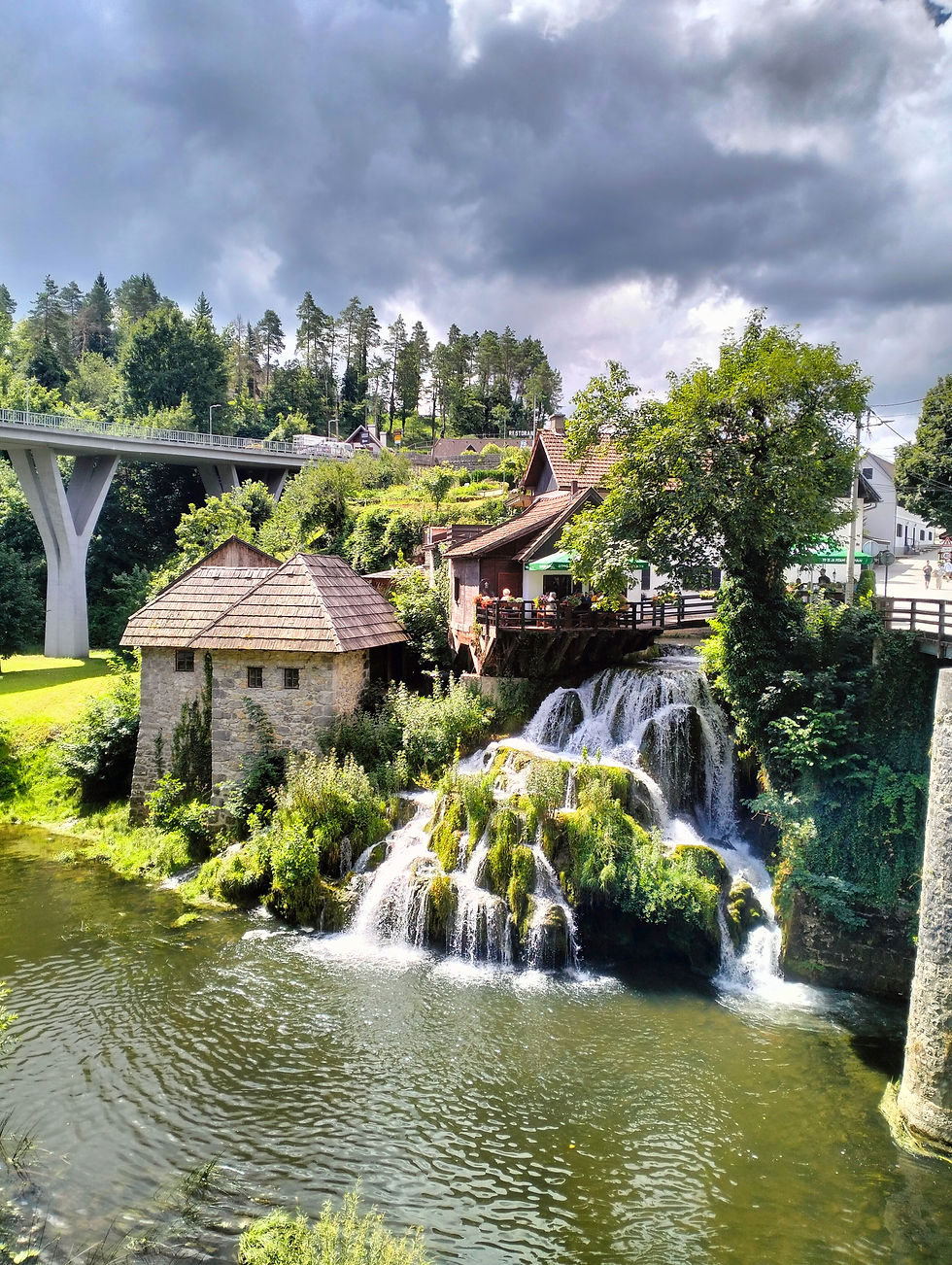
After spending the night in Zagreb, we officially began our road trip through Croatia. As we drove along the motorway, we enjoyed the scenery, particularly the dense oak forests that accompanied us for much of the way.
On the way to the famous Plitvice Lakes, we stopped in Rastoke. This small village, located at the confluence of the Slunjčica and Korana rivers, is often called ‘Little Plitvice’ because of its clear waters, waterfalls everywhere and strong connection to nature. The traditional houses and mills give this place a magical charmr.
If you are travelling from Zagreb to Plitvice, this is a stop we recommend and one that is worth spending a few hours visiting.
What to see and do in Rastoke
Rastoke has literally developed around water. Here, the Slunjčica River flows into the Korana River, creating a network of waterfalls, rapids and small lakes. Limestone travertine formations have shaped the landscape, creating rocky platforms and waterfalls that look like something out of a postcard. The sound of water accompanies us everywhere as we explore this place.
The power of water gave rise to the famous mills of Rastoke. At the end of the 19th century, there were more than 20 mills in operation. Some of them can still be visited today, such as Jarebovi Mlinovi, where you can see the traditional milling process and buy handmade flour.
The mills are unique structures, with travertine bases and wooden frames, naturally integrated into the landscape.
The Rastoke waterfalls
The Slušnica (Slunjčica) and Korana rivers meet here, and where the rivers join, a large tufa deposit has formed, creating 23 waterfalls, with heights not exceeding 20 metres, as well as a succession of rapids and pools.
Rastoke has several waterfalls, each with its own name and story. These are some of the most iconic:
Vilina Kosa (Fairy Hair)
Buk
Prvi Slap
Hrvoje Waterfall
Fun fact: otters live in crevices in the limestone tuff. With a bit of luck and silence, you might spot one!
Legends by the river
It has been a long time since the riverbanks were home to fairies, mythical beings from Slavic mythology. These mysterious figures were attributed with supernatural powers; they dressed in white and wore a crown or a wreath of green branches on their heads. They braided their thick hair and did the same with the manes of the horses they stole from millers, riding them through the night. With their dances, they easily seduced a man, often helping him, but they also took revenge if he broke his promise.
In times when fairies lived among us, they guided lost travellers through the fog to the right path, cured illnesses with herbs, rocked restless children to sleep or granted them supernatural powers.
These mythical creatures, endowed with magical powers, protected the pure springs. There is a magical aura in Rastoke that makes one think that these stories are not so far from reality.
Walk along the Promenade
The promenade is open to the public all year round, every day. The free part of the route includes a linear walk (there and back along the same path). The circular version of the walk includes the Vodene Tajne (“Secrets of Water”) trail, for which a ticket must be purchased..
Entrance ticket (Vodene Tajne): 5€
Includes:
• Crossing the new bridge next to the Jareb mill.
• Access to the Korana River canyon and its waterfalls.
• Visit to marked terrestrial areas.
Where to purchase tickets:
• Online: webshop.slunj.hr
• At automatic kiosks (card only):
◦ Entrance 1 (coming from Zagreb)
◦ Entrance 3 (coming from Plitvice Lakes, next to St. John's Bridge)
Special visits
• OPG Jarebovi mlinovi
Small traditional mill where you can buy handmade flour.
Reservations by email: jarebovi.mlinovi@gmail.com
Bridges with history
The Rastoke bridges are another point of interest. Some date back to the early 19th century and were important for the development of the region. One of the oldest bears the image of St. John of Nepomuk, as was customary on bridges in Central Europe. The wooden Moćan Bridge is a rare example of early 20th-century architecture and was renovated in 2015.
Food
The region's speciality is fresh trout, thanks to the cold, clean waters of its rivers. Most local restaurants serve trout-based dishes, accompanied by homemade bread, honey and regional products. Simple and delicious!
Two Days in Plitvice – An Immersion in Croatia's Wild Nature
Plitvice Lakes National Park

It is difficult to exaggerate when talking about Plitvice Lakes. This is Croatia's oldest national park and, most likely, its most famous. Listed as a UNESCO World Heritage Site since 1979, this place is a true natural spectacle — with 16 lakes connected by waterfalls, wooden walkways suspended over the water, lush forests and amazing biodiversity.
The park covers almost 300 km², although the area of the lakes represents only about 1% of the total. The rest is dense forest, meadows, mountains and karst formations.
The phenomenon of limestone tuff

Limestone (or travertine) tuff is a rock that forms from the precipitation of minerals from water. These formations create natural barriers that separate the lakes and form waterfalls. This process is still ongoing. The barriers continue to grow slowly, which means that the park is constantly changing. Here, the landscape is literally alive.
Explore the Great Lakes
After stopping in Rastoke, we went to explore the Upper Lakes. These consist of 12 lakes, which rest on impermeable dolomite rocks. Here, the water flows slowly through winding banks and dense vegetation, creating a more serene and natural environment.
We entered through Entrance 2, which provides direct access to the central area of the park. The first stage was to cross Lake Kozjak by electric boat, a peaceful crossing that is included in the entrance ticket and took us to the start of the walking route along the upper lakes.
We followed wooden walkways that led us to lakes such as Galovac, Gradinsko and Prošćansko, which is the highest altitude lake.
At the end of our tour of the Upper Lakes, we took the panoramic electric train back to entrance 2. Like the boat, the train is included in the park ticket and offers very pleasant views of the forest.
Explore the Lower Lakes and Veliki Slap Waterfall
On the second day, we woke up early to avoid the crowds and went to visit the Lower Lakes. The Lower Lakes group in Plitvice consists of four lakes, divided by limestone barriers (tufa): Milanovac, Gavanovac, Kaluđerovac and Novakovića brod. These four lakes are nestled in a deep gorge with limestone banks and vertical walls 40 metres high..
This time, we entered through Entrance 1 and descended towards one of the most eagerly awaited spots: the 78-metre-high Veliki Slap waterfall. It is the highest in Croatia and absolutely stunning.

After enjoying the waterfall, we continued along the trail to Lake Kozjak, where we stopped for lunch. We found a pleasant spot with wooden tables in a large meadow by the lake shore.
We then continued on the electric boat, crossing the lake to the opposite side, and returned to entrance 1 via a footpath along the opposite shore of the lake, offering a different view. This part of the route is quieter and therefore provides an excellent opportunity to observe nature more closely. We saw several fish, snakes, amphibians and insects, as well as a wide variety of flora.
Beech forests — Natural heritage of universal value
The beech forests covering much of Plitvice Lakes National Park are part of the ‘Primeval Beech Forests of the Carpathians and Other Regions of Europe,’ classified as a UNESCO World Heritage Site. These forests stand out for being virtually untouched ecosystems, where nature evolves without significant human intervention, allowing for the observation of rare and valuable ecological processes.
Dominated by Fagus sylvatica (European beech), these forests are home to a rich biodiversity, ranging from rare lichens and fungi to mammals such as brown bears, wolves and lynxes. The leaf-covered ground, fallen decaying tree trunks and variety of microhabitats create an ecological mosaic that is vital for many endangered species.
Lake Kozjak – The heart of the park
Lake Kozjak is the connecting point between the two sets of lakes. At 2.35 kilometres long and up to 48 metres deep, it is the largest lake in Plitvice. This is where you board the electric boats that cross the water silently and ecologically.
In addition, this is where you can catch the tourist ‘train’ (a small bus that looks like a train), which runs through the upper part of the park and makes it easy to return to the starting point.
The karst system and underground secrets

Plitvice is part of the karst region of the Dinaric Alps, a fascinating geological area with caves, sinkholes and dolines. More than 100 speleological formations have been identified in this area alone, some of which are visible from the trails.
Practical information for visiting Plitvice
Plitvice has seven main routes for visiting the lakes and four walking trails, all of which are well signposted. It is mandatory to stay on the marked trails, not to leave rubbish behind, not to touch the plants or rocks, and to respect the local wildlife.
The park is open all year round, but the experience changes depending on the season. In winter, the park is covered in snow and ice and looks like something out of a Nordic fairy tale.
Admission: we recommend purchasing tickets in advance, especially if visiting in July and August.
Prices vary depending on the season:
High season (June to September)
Low season (November to March)
There is the option of a 1-day or 2-day ticket — we opted for the 2-day ticket, which allowed us to explore the Upper and Lower Lakes at our leisure on different days.s.
You can purchase tickets on the official website: https://ticketing.np-plitvicka-jezera.en/
Transport: trains and electric boats are included in the ticket price, helping to shorten distances.
Restaurants: there are cafés and areas for simple meals within the park, but there are also options in the nearby villages.
Accommodation in Plitvice: Staying inside or near the park is an excellent option, especially if you are purchasing a two-day ticket. If you stay overnight in one of these hotels, the entrance ticket for the second day is free.
Skradin: Entrance to Krka National Park
After spending the morning exploring the Lower Lakes in Plitvice, we set off for the charming village of Skradin, considered one of the most scenic gateways to the park. Located on the banks of the Krka River, Skradin combines Mediterranean atmosphere, history and nature in a picturesque setting.
Before or after visiting the park, it is worth taking some time to explore:
Historic centre with cobbled streets and colourful façades.
Turina Castle. Located on high ground in the village, the castle offers panoramic views of the river and surrounding area. A short walk takes you to the top, well worth it for the scenery and photos!
River beach, ideal for a dip on hot days.
Skradin Marina, where boats depart for Skradinski Buk.para Skradinski Buk.
Sample Skradin's cuisine. The most iconic dish is Skradinski rižot, a meat risotto cooked slowly for several hours (some say it takes up to 12 hours) and traditionally prepared only by men. In addition, there is fresh fish from the river and sea, cured sheep's cheese, rosemary honey, dried figs and local white wines, perfect for accompanying a meal by the river.


Interesting fact: Skradin is one of Bill Gates' favourite holiday destinations.
Krka National Park

Krka National Park, located in the Dalmatia region of southern Croatia, is a true sanctuary of nature, history and culture. Created in 1985, the park protects most of the course of the Krka River, known for its crystal clear waters, stunning waterfalls and rich biodiversity.
Skrandinski Buk
First of all, it is worth mentioning that there are several entrances to Krka National Park. We chose to enter by car through the Lozovac entrance (with free parking), but it is also possible to access the park in a more scenic way: by boat from the port of Skradin.
Skradinski Buk is undoubtedly the most famous and photographed waterfall in the park. It is one of the most beautiful travertine formations in Europe, consisting of 17 waterfalls stretching over almost 800 metres. Here, the Krka River forms a series of lakes and rapids surrounded by lush vegetation. It is an absolutely idyllic setting, accessible by trails and wooden walkways. The area is also rich in ethnographic heritage, with restored old mills that show how people used to live and work by the river.

On the vertical sections of the waterfalls, mosses help to form authentic green curtains. All this contributes to the magical atmosphere of Skradinski buk, punctuated by the colourful flight of dragonflies and butterflies.
On the banks, the old water mills, fabric beating mills and washing tanks have been carefully restored, housing souvenir shops, cafés and exhibitions on local history. On the left side of the river are the ruins of Croatia's first hydroelectric power plant, Jaruga I, which was inaugurated on 28 August 1895.
Visovac – island with a Franciscan monastery
In the middle of the lake formed by the Krka River, between the Roski Slap and Skradinski Buk waterfalls, lies the small island of Visovac. On this serene island, surrounded by calm waters and dense vegetation, stands a Franciscan monastery founded in the 15th century. The monastery houses a valuable library, ancient manuscripts and sacred art. The island is visited by boat, offering an enchanting view of the surrounding landscape.

The island of Visovac is one of Croatia's most important natural and cultural sites. Surrounded by the calm waters of the lake of the same name, this small islet is home to a history rich in spirituality and resistance.ia.
Initially inhabited by hermits of St. Augustine, it was in 1445 that the Franciscans settled on the island, where they later built the monastery and church of Our Lady of Mercy, completed in 1576. Since then, Visovac has become a true haven of peace and prayer, even during the most turbulent periods in the history of the Balkans.s.
Inside, it houses a remarkable archaeological collection, liturgical relics, vestments and ceremonial vessels, as well as a library rich in valuable works and incunabula (books printed before 1501).
The spiritual heart of Visovac is the painting of Our Lady, which, according to tradition, was brought by the Franciscans when they fled Bosnia in the face of the Ottoman threat. Because of this centuries-old devotion, Visovac is known as the Island of Our Lady.
Roski Slap
After visiting Visovac, the boat trip continues to Roški Slap. Still on board, you can already see the largest waterfall, which crashes into the lake with a roar.
After disembarking, we took advantage of our free time to take a short walk and admire the beautiful limestone tufa waterfalls, known as ‘the Necklaces’ due to the delicate, undulating shape of their formations.
Next to the pier, there is a small recreation area where you can take a dip or simply relax on the lake shore. There is also a cosy restaurant in a restored old watermill.
Right next door is an interpretive centre, which is well worth a visit. There you can learn more about the history of the region, the traditions linked to the Krka River, and see how the mills worked.
Nearby is the Oziđana pećina cave, where the oldest traces of human presence in this area were discovered.
Practical tips for visiting Krka National Park
Park Entrances
Krka National Park has several entrances, and choosing the best one depends on the type of visit you want to make:
Lozovac – Main entrance, with free parking, ideal for those arriving by car. Provides direct access to the Skradinski Buk area.
Skradin – River entrance, accessible via a boat trip on the Krka River (included in the ticket price). A scenic and popular way to start your visit.
Roški Slap, Burnum, Kistanje, Krka Eco Campus Puljane and others – ideal for exploring specific areas of the park or taking less crowded trails.
Boat Trips
The park offers several types of river tours. Here are the most popular ones:
Skradin → Skradinski Buk (round trip) – Included in the regular ticket price.
Skradinski Buk → Visovac Island → Roški Slap → Skradinski Buk – Circular tour with stops.
Roški Slap → Krka Monastery → Troviska Glavica – Focused on religious heritage.
Special tours for groups– They may include guided tours or themed itineraries.
Tip: boat schedules and availability may vary depending on weather conditions and water levels. Please check with the visitor centre on the day of your visit.
Walking Trails and Nature
There are over 20 kilometres of well-marked walking trails within the park, ideal for exploring at a leisurely pace and discovering viewpoints, old mills, Roman ruins and less touristy areas.
Arrival in Dalmatia – Makarska and the Magic of the Adriatic
From Skradin, we continued our journey towards Dalmatia, heading for our next accommodation in Makarska. Located between the sea and the imposing Biokovo mountain range, Makarska is one of Croatia's best-known seaside resorts. The town is part of the famous Makarska Riviera, known for its white pebble beaches, crystal clear waters and typical Mediterranean atmosphere. It was the perfect base from which to explore this part of Croatia!
The change in landscape also brought a clear change in climate. In Makarska, we experienced very hot days and conditions typical of the local phenomenon known as jugo, a hot, humid wind that blows from the south-east, coming from the Mediterranean and North Africa, and which makes the atmosphere heavy. As we were later told, this is a type of weather that the Dalmatians do not particularly appreciate, as it causes fatigue, low energy levels and a certain lack of mental clarity. It is the exact opposite of the Bura (a cold, dry wind from the north), which brings clear skies, incredible visibility and more energy. That is why the Dalmatians often say that: “When the heat is on, you don't feel like doing anything.”
The next day, before dawn, we woke up early and left for Split, where one of the highlights of the trip awaited us: a full-day tour of the Adriatic islands.
Split: UNESCO World Heritage Site
Located between the deep blue Adriatic Sea and the green hills of Marjan, Split is Croatia's second largest city and a veritable open-air museum. Its most precious jewel is Diocletian's Palace, built in the 4th century by the Roman emperor of the same name — one of the best-preserved Roman palaces in the world.o.
It is precisely this palace — and the historic area surrounding it — that led to Split being classified as a UNESCO World Heritage Site in 1979. But the most fascinating thing is that this is not a “closed” archaeological site: the old palace is still alive. Streets, shops, restaurants, flats and squares have developed inside and around the Roman walls, creating a unique atmosphere where the past and present intertwine. Today, Split offers its visitors an irresistible blend of heritage, culture and Mediterranean charm.
The main attractions of Split
Diocletian's Palace (UNESCO World Heritage Site)
The imposing Roman complex that is still the heart of the ancient city today, built in the 4th century. It includes:
Golden Gate – The most elaborate of the palace's four main entrances, flanked by the statue of Bishop Gregory of Ninputopis.
Peristyle – The central courtyard with Corinthian columns, where scenes from Game of Thrones (Daenerys' throne) were filmed.
Vestibule
Palace Cellars (Podrumi) – the underground structure that supported the imperial quarters of Diocletian's Palace. Today, they are one of the best-preserved areas of the complex and can be visited. The Palace Cellars (Podrumi) served as the setting for the interiors of the city of Meereen in the Game of Thrones series, currently hosting exhibitions dedicated to the series.
Cathedral of Saint Domnius (Sveti Duje)
Originally the mausoleum of Emperor Diocletian, it was later converted into a Christian cathedral. It stands out for its 57-metre-high bell tower.
Fruit Square (Voćni trg)
Former fruit market square, now a historic site with a strong Venetian influence, where you can find the statue of Marko Marulić, considered the father of Croatian literature.
Riva (Promenade)
Lively promenade with cafés and cultural events.
Marjan Forest Park & Marjan Hill (Marjan Hill Stairs)
Known as Split's green lung, this forest park rises to an altitude of around 178 metres and offers incredible panoramic views of the city, the Adriatic Sea and the neighbouring islands. It is an ideal place for walking, running, cycling and relaxing, with well-marked trails, small hidden beaches, viewpoints and historic chapels scattered along the route. The climb up the famous Marjan staircase is rewarded with one of the best panoramic views of Split.
Tour of the Adriatic Islands – Hvar, Pakleni, Blue Lagoon and more
This full-day tour of the Adriatic islands provided an unforgettable day. Lasting approximately 10 hours, it is ideal for those who want to visit several islands in a single day and experience the true spirit of the region, marked by the famous ‘fjaka’, the Croatian art of living without haste.
On this particular day, it was not possible to visit the Blue Cave due to sea conditions associated with the jugo, which made entry unsafe. Nevertheless, we included the Blue Cave in this itinerary as it is one of the most iconic spots in the region. Interestingly, on the trip we organised the following year with a group, we were luckier: the sea was calm and we were finally able to enter the cave, considered one of Croatia's great natural wonders.
Blue Cave
The Blue Cave, located on the island of Biševo, is one of Croatia's most iconic natural formations and one of the main attractions of tours around the Adriatic. The phenomenon that makes it so special occurs when sunlight enters through an underwater opening and reflects off the bottom of the cave, illuminating the interior with an intense blue glow. This effect is most visible during the middle of the day and depends greatly on the brightness and state of the sea.
The cave is part of a protected natural area, which means there are strict rules governing access in order to preserve its ecosystem. Visits are only permitted in small authorised boats, and swimming inside the cave is not allowed. The number of daily visits is controlled, and access may be temporarily suspended whenever sea conditions are unsafe.
For this reason, visits to the Blue Cave are always subject to sea conditions. Waves, wind or sudden changes in weather can prevent entry, even on seemingly favourable days. When this happens, the skippers adjust the route and head for alternative locations where it is possible to swim and continue enjoying the day, with safety as the priority.

Komiža (Vis Island)
Located on the western coast of the island of Vis, Komiža is one of Croatia's most authentic and well-preserved villages. A former fishing community, it retains a peaceful atmosphere, with narrow streets and stone houses.
For much of the 20th century, the island of Vis played a strategic role as a naval base for the former Yugoslavia. For this reason, it was closed to foreigners until 1989, which ultimately halted mass tourism development and preserved its authentic character. It also gained international recognition for being the setting for the film ‘Mamma Mia! Here We Go Again,’ arousing the curiosity of many visitors.
The port of Komiža is the heart of the village, surrounded by cafés and restaurants with terraces by the sea. Among the best-known recommendations is Corto Maltese, highly praised for its Mediterranean cuisine based on fresh fish, seafood and local produce, an excellent choice for those who want to have lunch overlooking the Adriatic.
In terms of culture, Kaštel de Komiža stands out, an ancient Venetian fortress from the 16th century that now houses the Komiža Maritime Museum. The museum tells the story of fishing, navigation and the town's strong connection to the sea, with an emphasis on traditional boats and the fishermen's way of life.
Komiža is also an excellent starting point for exploring small beaches and coves with crystal clear waters, as well as for diving. There are several specialised centres that organise trips to submerged caves and ancient shipwrecks, taking advantage of the excellent visibility of the sea around the island.
One of the most special moments of our visit to Vis was a wine tasting at a small family winery, a simple and very genuine experience that allowed us to learn more about local wines.
Hvar
Hvar is one of Croatia's best-known and most visited islands. Elegant, lively and steeped in history, Hvar Town is an unmissable stop on any tour of the Adriatic islands from Split.
In Hvar, we had free time to explore at our own pace, strolling around the harbour, the cobbled streets of the old town and the lively squares. Hvar Town is home to the oldest public theatre in Europe (founded in 1612), as well as Renaissance palaces that bear witness to the town's prosperous past.
We climbed up to Hvar Fortress, also known as Španjola. Located at the top of the hill above the town, it offers one of the most beautiful panoramic views in Dalmatia, with Hvar Harbour and the Pakleni Islands right in front of it.

Built by the Venetians in the 16th century on top of older medieval structures, the fortress still has its walls, defensive towers and a small archaeological exhibition. It is undoubtedly the best viewpoint in the city, especially in the late afternoon, when the light of the setting sun transforms the landscape.
The climb is on foot, a walk of about 20 to 30 minutes from the historic centre, along a zigzagging path with steps, which crosses a Mediterranean garden.
Interesting fact: The name Španjola comes from the Spanish engineers who participated in the construction of the fortress.
Hvar is a popular destination for luxury yachts, celebrities and travellers from all over the world, offering a lively atmosphere and a distinctly cosmopolitan vibe. The next stop, on the wilder Pakleni Islands, was particularly welcome!
Pakleni Islands
The short crossing from Hvar takes us to a completely different setting. The Pakleni Islands are part of a protected natural area, recognised for its scenic and ecological importance. This small archipelago, consisting of more than 20 islets and rocks, stretches off the south-western coast of the island of Hvar and is distinguished by its wilder and less urbanised character.
We stopped at Stipanska Island, home to the Carpe Diem beach club. The club has sun loungers, cabanas and an iconic swing suspended over the sea, which has become one of the most photographed spots in the area. The place is very popular for sunset cocktails and DJ parties, especially during the summer.
The Pakleni Islands are an excellent retreat for those seeking sheltered coves, pebble beaches and crystal clear waters, ideal for swimming and snorkelling. As a general rule, boats provide snorkelling masks, but it is always a good idea to bring your own equipment.
Much of the islands are covered with Mediterranean pine trees, which provide natural shade by the sea. Many coves are only accessible by boat, which contributes to a more peaceful and unspoilt environment. During our stop, we took the opportunity to go diving and, of course, take the classic photo on the swing.

Blue Lagoon
The Blue Lagoon, located on the island of Budikovac, lies off the coast of Vis Island, surrounded by small islets that help protect the bay from wind and waves. This natural setting, combined with the clear, shallow seabed, is responsible for the intense turquoise hues that have made this place so famous. The waters are very clear and calm, ideal for swimming, snorkelling and exploring marine life. There is also a bar on the island for drinks and light snacks.
Stiniva Beach
Stiniva Beach, located on the southern coast of the island of Vis, is a small cove nestled between steep cliffs, often cited as one of the most beautiful beaches in Croatia. Its narrow access, almost hidden among the rocks, opens onto a sheltered bay with turquoise waters and white pebbles.
The beach became particularly well known after being voted the best beach in Europe in 2016, a distinction that helped to raise its international profile.
Biokovo Nature Park — Where the mountain meets the Adriatic
Biokovo Nature Park stretches immediately behind the Makarska Riviera, forming one of Dalmatia's most impressive landscapes. The mountain range rises abruptly from the Adriatic Sea, creating a rare contrast between limestone cliffs, arid high-altitude landscapes and open sea views.
With a landscape marked by karst relief, the park stands out for its great biodiversity, including numerous endemic species of flora, and for its panoramic views which, on clear days, allow visitors to see the Dalmatian islands and even the Italian coast. The highest point is Sveti Jure, at 1,762 metres, one of the highest peaks in Croatia.
One of the most recent and iconic attractions is the Biokovo Skywalk, a glass platform suspended over the sea, offering a unique perspective of the coastline and the Adriatic Sea.
Our experience in Biokovo Nature Park
We visited the park on an organised tour from Makarska, which we highly recommend due to the narrow, steep and winding road leading to the park. The climb was made in a minibus, accompanied by a local guide, which made the experience safer and more informative.
Access to Biokovo Nature Park is via Biokovska cesta, an impressive mountain road built in the mid-20th century and carved directly into the limestone rock. Over a distance of around 23 kilometres, the road climbs rapidly from sea level to altitudes of over 1,200 metres, negotiating dozens of tight bends, many of them without any side protection. For years, it was the highest paved road in Croatia, and it remains one of the most demanding in the country. As you climb, the feeling is inevitably dizzying for someone like me, who is not entirely immune to heights.
Along the way, we made several stops at viewpoints, where we learned more about the flora, geology and unique climate of the region. One of the highlights was, of course, the visit to the Biokovo Skywalk, located at an altitude of 1,228 metres, where the glass platform juts out beyond the cliff and offers an impressive view of the Adriatic islands and even the Italian coast.
The tour also included a short, easy walk to a high viewpoint, time for photographs and a break with mountain tea and homemade cake, a simple but very pleasant touch. During the visit, it was also possible to see wild horses, which are common in this area of the park.
The park has several walking trails. However, it is not recommended to walk them during the summer due to the very hot and dry climate, lack of shade and water sources. There are official records of serious accidents and deaths over the years, mainly associated with dehydration, heatstroke, disorientation and underestimation of the terrain and weather conditions. For this reason, the Croatian authorities and the Biokovo Nature Park itself advise against long walks in summer. The best times to explore the park's trails are spring and autumn.
Makarska beaches
The tour of Biokovo Nature Park took only half a day, so we spent the last afternoon relaxing on the beach, as we had promised our daughter.
Makarska is known for its white pebble beaches, clear waters and excellent sea quality. Most of the beaches stretch along the Makarska Riviera, with the Biokovo massif serving as a backdrop.
Some of the most popular beaches include:
Makarska Beach (Donja Luka) — right next to the centre, with good access, bars and water activities.
Biloševac — quieter, ideal for families.
Nugal — surrounded by nature, accessible by trail, one of the most beautiful in the region.
Baška Voda e Brela (in the vicinity) — often cited among the best beaches in Croatia.
As in other areas of Dalmatia, it is advisable to bring water shoes, as access to the sea is over pebbles.
In the evening, the temperature remained high, even after sunset. We took the opportunity to take a stroll along the Makarska Promenade, which was particularly lively.
In the port of Makarska, the traditional Fisherman's Festival was taking place, a popular summer event that celebrates the city's connection to the sea and fishing. The streets are filled with people, there are open-air concerts, traditional music, and various food stalls, mainly serving fish and seafood snacks. The atmosphere is informal, lively and very local, a great way to end the day.
And so we conclude our itinerary through Croatia. We still had an extra day to return to Zagreb and catch our flight home, but we preferred to end our trip here, between the Adriatic Sea and the mountains. We are left with fond memories and a desire to return.
Final Tip – Extend Your Trip to Dubrovnik
Our trip ended here, but for those who have a few more days available, we leave one last suggestion: extend the itinerary south to Dubrovnik.
From Split, there are regular ferries to Dubrovnik, a practical and scenic option for those who prefer to avoid driving. Alternatively, you can travel by rental car, but it is important to note that the route involves crossing the border into Bosnia and Herzegovina (at the Neum corridor).
Dubrovnik needs no introduction and is an excellent addition to this itinerary, especially for those who want to end their trip with a memorable visit to a historic city on the shores of the Adriatic Sea.
If this itinerary has made you want to travel to Croatia, we have a special invitation for you. In autumn 2027, we will be organising a trip to Croatia, designed for a quieter season with ideal temperatures for hiking, visiting nature parks and mountains, and even exploring a cave.

Some links in this article are affiliate links. By using them, you are supporting the Quimera GPS Blog at no additional cost to you.


Comments