
Montesinho Natural Park: A Guide to the Charms of Northeast Portugal


Welcome to the “Terra Fria” of Trás-os-Montes
A stone’s throw from Spain, in the far northeast of Portugal, nestled among mountains, rivers and stone villages seemingly suspended in time, lies one of the country’s best-kept secrets: Montesinho Natural Park.
Located in the district of Bragança, this park is a tribute to nature, tradition, and mountain life. Established in 1979, it is one of the largest natural parks in Portugal, covering approximately 75,000 hectares, stretching from the municipality of Bragança to Vinhais.
Here, the landscape has been shaped by centuries of harmony between humans and nature. The Montesinho mountain range spans the Portuguese-Spanish border, with its highest point in Portuguese territory reaching 1,486 metres — making it one of the highest ranges in northern Portugal.
A Sanctuary of Biodiversity
With its rugged terrain and microclimates that shelter an impressive variety of species, Montesinho Natural Park is home to 80% of all mammal species found in Portugal. Deer, wild boar, roe deer and otters roam freely through this sanctuary, alongside one of the most iconic symbols of Iberian wildlife: the Iberian-wolf.
From September to November, the park comes alive with the Red Deer Rut, the red deer rutting season. At dawn and dusk, the males move into open areas, releasing powerful guttural calls to attract females and intimidate rivals. And when vocal displays are not enough, they clash — antlers interlocked, strength tested in dramatic physical battles.
For nature lovers, witnessing the red deer rut in Montesinho is an unforgettable experience, and one of the most remarkable spectacles of autumn in the park.

Montesinho is also home to over 150 bird species. If you’ve got patience — and a good pair of binoculars — you might spot golden eagles, egyptian vultures, black storks, blue rock thrushes, and many more.
Reptiles are also well represented, with 18 recorded species, including rarities like the Lataste’s viper (víbora-cornuda) and the Iberian emerald lizard (lagarto-de-água). No less than 50% of Iberian endemic species occur in this area — a clear sign of its outstanding ecological value.
Montesinho’s Flora


The landscape is dominated by oak woods of Pyrenean oak (Quercus pyrenaica) and chestnut groves, many of them centuries old. Along the waterways, you’ll find lush riparian galleries with holly (Ilex aquifolium), ash, and willow trees, forming green tunnels where life quietly takes refuge.
More hidden — but no less valuable — are the peat bogs: true natural sponges that store water, filter nutrients, and preserve rare biodiversity.
Mountain Meadows – Living Grasslands of the Highlands

Like a green blanket stretching across the foot of the slopes, lameiros are semi-natural meadows that develop along watercourses, taking advantage of areas with poor agricultural potential. They rely on a traditional gravity-fed irrigation system, a remarkable piece of traditional rural engineering.
These meadows are used for seasonal grazing, and it's from here that hay is harvested to feed livestock during the winter. Thanks to the continuous flow of water through small channels, lameiros are able to resist frost and snow, even in the coldest months.
Along their edges grow plant species that help stabilise the soil and protect biodiversity — such as narrow-leafed ash, poplars, pyrenean oak, hawthorn, wild plum, and, at higher altitudes, even birch trees.
These meadows are a key component of the Montesinho ecosystem, reflecting the harmonious relationship between local communities and the natural landscape.
Soils and Rocks
Geodiversity is also part of Montesinho’s charm. The soil here is a true mosaic of origins: granite, schist, migmatite, gneiss, and ultrabasic rocks, spread across hills, plateaus, and valleys deeply carved by the Sabor, Maçãs, Baceiro, and Tuela rivers.
Mountain Villages
Rio de Onor – Where Portugal and Spain share everything


Few villages are as unique as Rio de Onor, where the border is little more than a symbolic line. On one side, Portugal; on the other, Spain (Rihonor de Castilla). But for locals, it’s all one community — the povo de acima and the povo de abaixo — living a communal way of life that defies time.
This community village is crossed by the Rio Onor, and its most distinctive trait is its collective organisation. Ovens, mills, the boiada (shared livestock grazing), communal lands, the village forge — everything is shared. There’s even a local council that still meets to deliberate. Offences are recorded with the ancient vara da justiça... and paid in wine. The greater the mischief, the bigger the fine — and the bigger the party.

The village also has its own dialect, now nearly extinct: rionorês, which has roots in the Astur-Leonese language family. Traditional houses in schist with wooden balconies retain their original architecture. Animals and produce are still kept on the ground floor. For all of this — and more — Rio de Onor was chosen as one of the 7 Wonder Villages of Portugal, in the “Villages in Protected Areas” category.
What to See and Do in Rio de Onor
River beach – Small and peaceful, with the clear waters of the Rio Onor — perfect for a summer dip or cooling your feet.
Community mill – Still in operation, it stands as a symbol of the shared way of life that continues here.
Casa do Touro – A museum space dedicated to the community’s past and cultural heritage. Learn about the communal system, the role of the touro do povo (the people's bull), and the Festas dos Rapazes (Boys’ Festivals) — all through digital media and interactive content. This was also where the community’s bull was once kept.
Festa dos Reis (January 6th) – A coming-of-age ritual for unmarried young men, featuring masks and unique traditions.
Carabelho – A rudimentary handmade latch that’s easy to remove. It only makes sense in a place like this, where trust still rules.
Rio de Onor offers several services — restaurants, accommodation, and a few shops selling regional and local products. Wandering its streets is like stepping into a living lesson in heritage, where you learn how to live in community — and without borders.
Guadramil – The (Almost) Secret Village

Just nearby, hidden among hills and forest, lies the remote border village of Guadramil — a place that seems purposefully tucked away between rugged mountains and deep valleys, right on the edge of Montesinho Natural Park. Though part of the municipality of Bragança, it lives as if in a territory of its own — isolated, preserved, and deeply rooted in its identity. Reaching Guadramil isn’t easy — and don’t expect phone signal.
For centuries, Guadramil existed in a kind of informal autonomy. With little state presence and a secluded location, the local community developed its own ways of self-governance, sharing, and even defence, especially during times of scarcity and instability. That condition shaped unique forms of collective organisation and social resilience.
Despite being administratively part of Portugal, Guadramil lives in a kind of territorial and cultural limbo. Its proximity to Spain and historical isolation fostered the growth of a community with distinctive traits, including its own language and ancestral communal practices.
Nestled in the valley of the Guadramil stream, the village features well-preserved schist houses and a singular sense of community. The communal forge and wine press speak of a time when the village was the whole world, and labour was shared through mutual help in harvests and collective land management.
For centuries, locals spoke Guadramilês, a dialect blending elements of archaic Portuguese, Mirandese, and Castilian Spanish. Guadramilês was spoken until the mid-20th century and is now virtually extinct.
Local spirituality is expressed in the Church of São Vicente, built in traditional schist architecture, and in the religious and pagan festivals that mark the rhythm of village life.
The Guadramil iron mine, officially registered in 1923, is a little-known yet significant part of the village’s heritage. Hematite, limonite, siderite, and barite were among the minerals once extracted during a brief period of activity — limited by the region’s isolation and lack of infrastructure. Though now deactivated, the mine still attracts the attention of geologists and researchers.
Montesinho – The Heart of the Park
Montesinho is not only the village that gives its name to the Natural Park — it’s also one of the highest and most iconic settlements in all of Terra Fria Transmontana. Perched at around 1,030 metres of altitude, this typical mountain village is nestled high in the hills, surrounded by endless nature.
Granite houses with black slate roofs and wooden balconies line the narrow cobbled streets. The parish church of Santo António rises above the cluster of houses, inviting moments of quiet contemplation. It’s well worth walking through the village lanes, passing stone-walled gardens — the traditional cortinhas — and listening to the sound of the Vilar stream, which winds gently by.


The Fonte de Montesinho, also known as the village fountain, is one of the traditional features of the local vernacular heritage. Located in the old centre of the village, it’s a fine example of how water was — and still is — a central resource in the community life.
The surrounding landscape unfolds in a patchwork of wet meadows (lameiros), chestnut groves, and oak woods, forming an agricultural and forest mosaic that sustains local life. Nearby lie the memories of the former Portelo mining complex, once dedicated to tin extraction.
With rural accommodation, cafés, and a restaurant, Montesinho is a perfect base for those looking to explore the park. It’s also the starting point for scenic hikes like the Porto Furado Trail (PR3), which winds through granite landscapes, woodlands, and legendary sites.
Varge – Where Tradition and Food Go Hand in Hand
In Varge, the Caretos, wearing brass masks and colourful costumes, take to the streets during the winter festivals, keeping alive one of the region’s oldest and most iconic traditions. Local artisans, such as António Alves and Fernando Tiza, still craft these masks by hand — in wood, brass or straw.
The old Fonte do Careto, decorated with a tile panel depicting the Festa dos Rapazes, stands as a symbol of the village and its cultural identity. Near the rustic bridge over the Onor River, a striking Caretos mask hangs from a tall post — like a silent guardian of the village’s collective memory. The most traditional restaurant in the village proudly reinforces this spirit, taking the name “O Careto”.

Aveleda – Rural Life and Local Know-How
Aveleda is a village deeply connected to the land, to wine, and to traditional craftsmanship. Here, you can feel the pulse of rural life — from time-honoured farming practices to fine smoked sausages, all wrapped in a warm, welcoming atmosphere. It is also home to artisans like Gilberto Ferreira, known for his handcrafted pocket knives.
The surrounding landscape invites you to slow down and take it all in — lameiros, oak woods, and chestnut groves compose a true postcard of the Terra Fria.
Vinhais – The Village of Chestnuts and Smoked Meats
More urban, yet still true to the Transmontano spirit, Vinhais is known for its outstanding local products: chestnuts, smoked meats, mushrooms, and honey. This is where the famous Feira do Fumeiro (Smoked Meats Fair) takes place, and where you’ll also find the Interpretation Centre of the Protected Landscape of the Serra da Coroa — an excellent introduction to the mountainous terrain of the region.
It's worth climbing to the Castle of Vinhais, which offers privileged views over the village and the surrounding mountain ranges. Built in the 13th century, the castle served a strategic defensive role during the wars between Portugal and Castile. Today, the remaining walls and towers are part of a beautiful urban park, perfect for a peaceful walk with views over the Montesinho Natural Park.
On the outskirts of the town lies the Vinhais Biological Park, a space designed to showcase the region’s native fauna and flora. It features enclosures for local wildlife, interpretive trails, educational gardens, and even a mycology centre. It’s an ideal destination for families, school groups, or any curious traveller eager to explore the nature of the Terra Fria in an engaging and educational way.
Gimonde – Gateway to the Park
Although not entirely within the boundaries of the Natural Park, Gimonde is one of the main gateways to Montesinho. Renowned for its gastronomy, the village is home to iconic restaurants such as D. Roberto and O Abel, both known for traditional regional dishes and local smoked meats. It is also here that the famous Gimonde cured ham is produced.
Right at the entrance to the village stands the Old Bridge over the Onor River, of medieval origin, built in stone and composed of several arches. This historic bridge, which for centuries served travellers, herds, and trade, is now one of Gimonde’s most iconic landmarks — and a must-see stop for visitors.

França – By the calm waters of the Sabor River
As you approach França via the road from Rabal, the landscape opens up in beauty: the village stretches across the bottom of a valley, nestled between the foothills of the Montesinho mountains and a vast agricultural plain.
Beneath the surface lie the remains of an intense mining past: the old gold mines of França. Although now inactive, they are a reminder of a time when the extraction of natural resources shaped daily life in the region.
In summer, the spotlight is on the França River Beach — a peaceful spot with clear waters, a well-preserved riparian gallery, a swimming area, picnic zone, and plenty of shade. For something different, visit the França Equestrian Centre, where you can see Lusitano horses up close and even book horseback rides through the mountains, some of which cross the Sabor River.
According to the Monografia das Freguesias do Concelho de Bragança (Municipal Monograph), Sousa Viterbo, in his Elucidário, associated the word “frança” with small branches or twigs — the leftover trimmings from felled trees. The village name may therefore be linked to the abundance of trees and vegetation once found here.
Vilarinho – A peaceful corner in Montesinho Natural Park
Lastly, we recommend a visit to the quiet yet charming village of Vilarinho. Its river beach, still largely undiscovered, is a local hidden gem: shaded by trees, easily accessible, and the perfect place to relax by the water on hot summer days. It’s located in an area of high ecological value, where well-preserved riparian forests serve as habitats for species like the rock thrush, grey heron, and otter.
There’s plenty to explore nearby at a gentle pace: a welcoming picnic area, an old watermill, and a traditional stone bridge crossing the Baceiro River — one of the village’s most distinctive heritage features.
The Church of São Cipriano marks the village centre and plays an important role during local festivities. Vilarinho is also a great place to buy local products — jams, honey, and small-batch cured meats — all made in the traditional way, with the authentic flavour that only the Terra Fria can offer.
It’s also the starting point for the Ornal Trail (PR4), a circular walk through dense forests, streams, and areas of rich biodiversity — which we’ll explore in the next section.


Trails in Montesinho Natural Park
Deer Route (Rota dos Cervídeos)
This trail is one of the best ways to observe wild deer and roe deer, especially in autumn during the rutting season, one of the most remarkable natural spectacles of Montesinho Natural Park. It’s around 9 km of walking through both forested and open areas.
Distance: 8.9 km
Type: Circular
Difficulty: Low to medium
Duration: ~1h30
Elevation gain: ~170 m
Starting point: Village square of Guadramil
Best season: Autumn (rutting season)
Waymarking: Exists, but with some inconsistencies
Highlights:
Walk through oak woods, mountain meadows, and agricultural fields
Chance to spot deer, roe deer, mushrooms, and birds
Rural heritage: parish church, mills, community forge, wine press, and traditional ovens


This trail crosses one of the most pristine and biodiverse areas of the park — the Alta Lombada region, between Guadramil and the hills that line the border with Spain. Here, nature has been left undisturbed long enough to preserve its delicate balance.
Local wildlife includes discreet yet iconic species: the Iberian wolf roams silently through the more remote areas; deer and roe deer move through clearings at dawn; and in the skies, short-toed eagles, kites, and other birds of prey soar overhead.
The trail winds through forests of pyrenean oak, pedunculate oak, and chestnut trees, interspersed with riparian galleries, shrubland, and pastures. The granite and schist soils support flora well-adapted to the mountain climate, displaying seasonal colours — from the fresh greens of spring to the golden hues of autumn.
The Portuguese Side of Rio de Onor
This 7 km circular trail is ideal for those who want to walk with their senses fully attuned to the history, landscape, and communal way of life of Rio de Onor. Starting at the rural campsite, the route follows a counterclockwise direction, passing through humid forests, lush meadows, and rural paths, alongside the Onor River.
Distance: 7 km
Type: Circular
Estimated duration: ~2h
Difficulty: Medium
Total ascent/descent: +230 m / -230 m
Minimum / maximum altitude: 686 m / 770 m
Starting / ending point: Car Park of the Rio de Onor Campsite
Best season: Year-round
Scope: Natural, scenic, and cultural


O percurso começa com uma subida suave por estrada asfaltada, antes de entrar em caminhos de terra que sobem até aos pontos mais altos do trilho, com vistas amplas sobre montes e paisagens agrícolas. Ao descer em direção ao rio Onor, o trilho conduz-nos à zona do Cimo do Couto de Baixo, onde se ergue um Carvalho-negral centenário, classificado como Árvore de Interesse Público desde 2012.
Segue-se uma passagem junto a lameiros férteis, por trilhos estreitos na margem do rio, onde surgem formações rochosas como a Fraga do Rio Onor e pequenas áreas de vegetação ripícola. A travessia da antiga ponte de pedra (séc. XIX) marca o regresso à aldeia — agora pela margem oposta, permitindo explorar as ruas típicas, a Igreja Matriz, os moinhos, o forno e a forja comunitária.
Se quiseres conhecer a fauna local de forma mais profunda e respeitadora, a Dear Wolf, sediada em Rio de Onor, organiza passeios guiados focados na conservação do lobo-ibérico e no equilíbrio entre comunidades humanas e vida selvagem. Mais informações em: https://dearwolf.wixsite.com/dearwolf.
Ornal Trail
The Ornal Trail (PR4) runs between the Ornal stream—which you’ll cross several times—and the Baceiro River, revealing an impressive ecological diversity. This is a trail rich in rural heritage and small details that tell the story of a region deeply connected to its land. It surprises with its landscape variety: between schist paths, streams and ancient water channels, the Ornal Trail is a true hidden gem.
Distance: 9.5 km
Type: Circular
Estimated duration: ~3h
Difficulty: Medium
Starting / ending point: Vilarinho village
Best season: Spring and autumn
Main interest: Scenic, ecological, and ethnographic


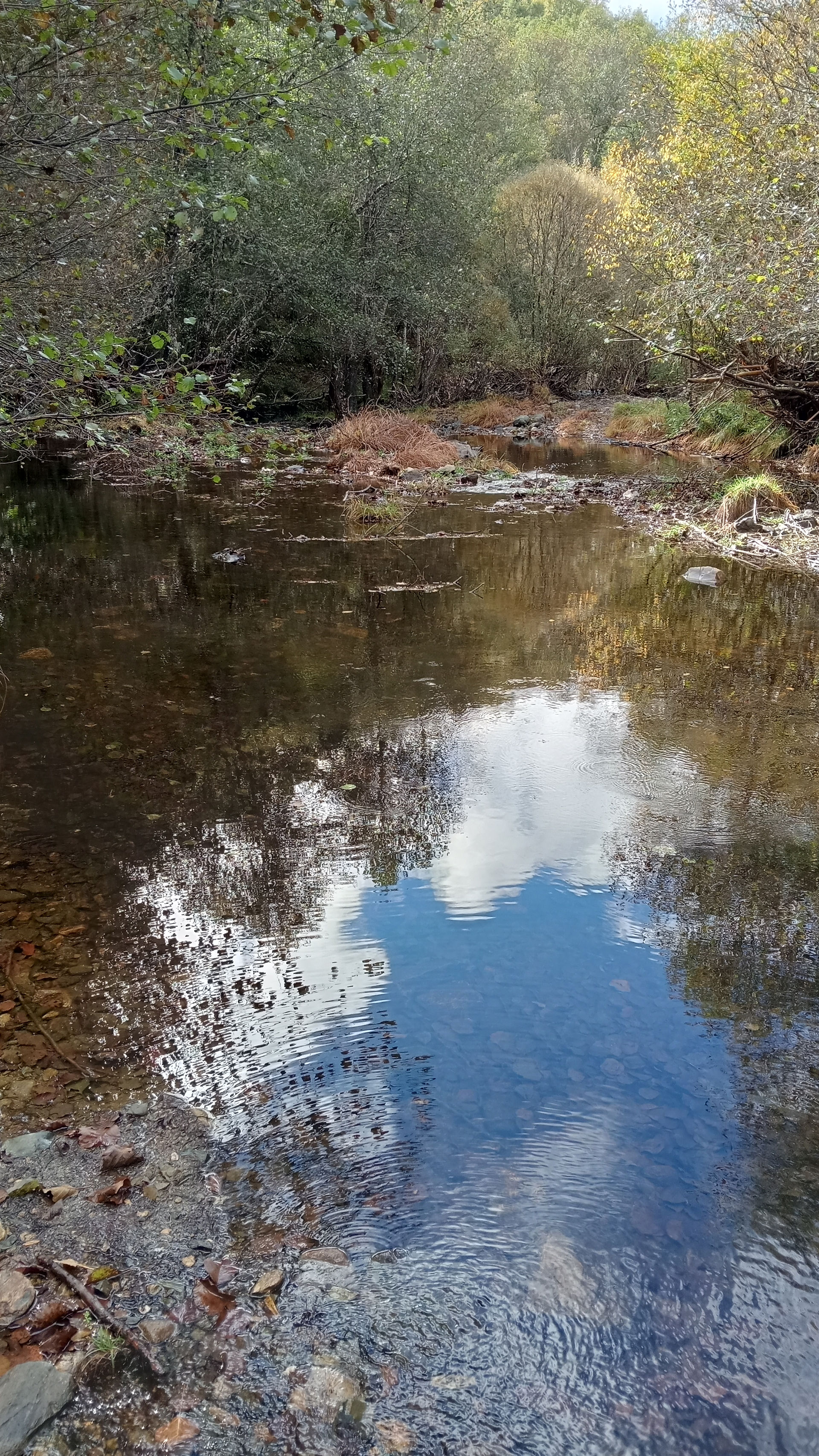


In areas with ultrabasic soils (rich in heavy metals), you’ll find small holm oaks and rare plants adapted to extreme conditions, such as arméria, arenaria, or wild pinks (cravina). On the more fertile slopes, pyrenean oaks dominate, forming woodlands that provide shade, shelter for wildlife, and cool trails for hikers. Along the riverbanks, meadows (lameiros) are neatly outlined by riparian species — ash trees, willows, and alders — with paths bordered by traditional dry-stone walls.
The human landscape is also present. One of the highlights of the trail is the passage through the old lime kilns of Cova de Lua, used until the 1960s to transform limestone into quicklime — essential in traditional agriculture and construction. This is also the only place in the municipality where limestone outcrops can be found. Another point of interest are the community watermills, built along the banks of the Baceiro River. Two belong to the village of Vilarinho and one to Cova de Lua.
At one of the trail’s highest points stands the Chapel of Santo Amaro, built on the remains of an Iron Age fortified settlement known as Cidadelha. This place name, along with its strategic location, suggests a prehistoric hillfort (castro), even though archaeological remains are no longer visible at the surface. From the top of Cidadelha, the trail offers one of the best panoramic views over the Baceiro River valley.
Porto Furado Trail
The PR3 – Porto Furado Walking Trail unfolds to the north of the village of Montesinho, in a granite landscape featuring striking rock formations: slabs, boulders, and scattered stone blocks.
Right after leaving the village, the scenery is dominated by mountain meadows (lameiros) and chestnut groves (soutos). As you ascend, the path crosses through pyrenean oak (Quercus pyrenaica) woodlands and even a few birch trees, forming a characteristic vegetation mosaic of the Terra Fria Transmontana.
Along this ascent, you’ll also spot Falgueirão, an iconic geological landmark of the Montesinho mountains. With its distinctive conical shape, this hill is made up of large, rounded boulders formed by the erosion of granites over 245 million years old. Today, Falgueirão is covered in dense shrubland — heather, broom, carqueja, and charguaço — giving it an even wilder appearance.

Shortly after, the trail reaches the Serra Serrada Dam, located at around 1,200 metres of altitude, built along the Ribeira das Andorinhas stream.
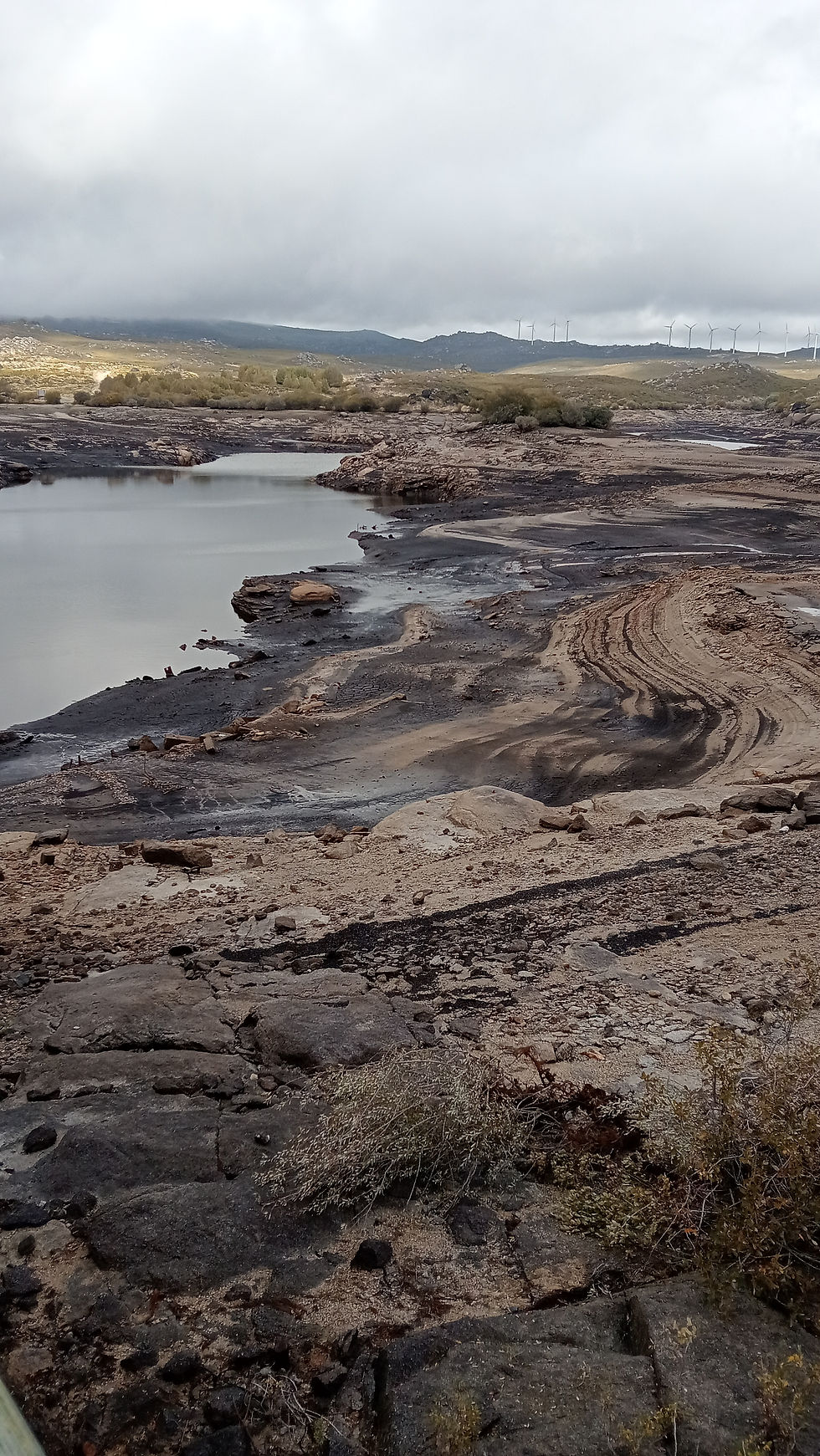
One of the most emblematic spots on the trail is Porto Furado. Here, the Romans once mined for gold, and traces of this ancient activity can still be seen — a clear testament to Roman engineering in the heart of what is now Montesinho Natural Park.

Distance: ~9.5 km
Type: Circular
Duration: ~3h
Difficulty level: Medium
Start/End point: Montesinho
Best season: Spring and autumn (avoid fog and snow)


Castro Curisco and the Fraga da Medideira
On the descent, the trail passes by Castro Curisco, a site of granite rock art where you can see carvings of cup marks, zoomorphic figures, and crosses etched into the stone. Some of these markings remain open to interpretation, but they are believed to be of prehistoric or medieval origin.
Nearby lies the Fraga da Medideira — a large rock formation where, according to local tradition, the village children used to measure their height against the carved crosses on the stone walls.
Where to Eat
Transmontano Cuisine
In the Terra Fria Transmontana, the chestnut is queen: it flavours soups, sweetens desserts, and enriches liqueurs. In the soutos, autumn is a time of harvest, gathering, and the scent of wet earth. In winter, it’s time to prepare the enchidos— alheiras, salpicões, blood and lung sausages, butelos, and morcela, all rustic flavours, cured in smoke.
Here, the bísaro pig is fed on chestnuts, potatoes, and turnips, and is part of an age-old domestic economy. The Mirandese ox, on the other hand, gives us one of the region’s greatest delicacies: the posta à mirandesa, from high-altitude pastures.
But the table isn’t only about meat. There are wild mushrooms, like repolgas and míscaros, river trout, chestnut soup, walnut and honey cake... The cuisine of Montesinho is a kind of alchemy between what nature offers and what culture knows how to preserve.
Restaurants Not to Miss
Casa do Careto (Varge)
A must-stop in the region. Located in the heart of the village of Varge, Casa do Careto is known for its dishes made with local ingredients and cooked in a wood-fired oven. The atmosphere is familiar, the service warm, and the flavours are genuinely Transmontano.
Restaurante Típico D. Roberto (Gimonde)
A gastronomic institution since 1935. Located in Gimonde, this restaurant is housed in a traditional Transmontano building and serves typical dishes featuring house-made smoked meats.
Restaurante Cepo Verde (Gondesende)
Set among oak and chestnut trees, Cepo Verde serves regional dishes using seasonal ingredients, such as repolgas (wild mushrooms) with Vinhais smoked meats or pork loin with chestnuts.Bread is baked in a traditional wood-fired oven using local flours. On baking days, visitors can watch the process and enjoy the aroma, making the meal even more special.
O Javali (Portelo)
Recommended by the Michelin Guide, this restaurant is a classic spot for game meat and traditional Transmontano cuisine. Specialties include braised wild boar, pickled trout, lamb, and butelo with casulas (smoked pork with dried beans).
O Pote (Bragança)
Located in the historic centre of the city, this cosy restaurant offers a solid selection of Transmontano tapas and traditional dishes.
Casa da Edra (Montesinho)
Casa da Edra, in Montesinho, is a welcoming restaurant within a rural tourism house, perfectly in tune with the village spirit.In addition to serving meals, they also sell homemade jams, pastries, and cookies.
Traditional Dishes You Must Try
Posta à Transmontana (grilled beef steak, Transmontano style)
Butelo com casulas (smoked pork sausage with dried bean pods)
Chestnut soup
Chestnut pudding
Repolgas with smoked meats
Grilled river trout
Homemade alheira (smoked bread sausage)
Culture, Traditions and Local Festivals
These lands preserve traditions older than the nation itself, inherited from a time when borders and states did not yet exist. The Iberian peoples who lived here before the arrival of the Romans were guided by astronomical events and by an intimate, ongoing relationship with nature.
Many of the rituals and customs that have survived to this day are deeply rooted in rural paganism, reflecting ancestral beliefs in natural forces, the cyclical renewal of life, and the balance between humans and the land.

Bragança’s Winter Festivals
With the Winter Solstice, the Winter Festival cycle begins in Terra Fria Transmontana, stretching from 25 December to 6 January — a time full of colour, noise and symbolism. It’s a season of collective celebration that marks both the renewal of the year and of community life itself.
Among all the festivities, one stands out: the Festa dos Rapazes — or Festival of the Boys — also known as the Feast of Saint Stephen. This is a traditional rite of passage from youth to adulthood. Dressed as caretos, with colourful costumes, bells and irreverent masks, the boys roam the village in a spirit of freedom and misrule.
“Between 25 December and 6 January, all across the Terra Fria, this festive cycle fills the villages with life, sound and colour. The masked figures — the caretos — take over the streets, creating chaos, mocking power and overturning the social order.”
In villages like Aveleda, the celebration begins with the gathering of firewood for the communal bonfires. On 25 and 26 December, boys aged 16 and under take to the streets wearing exuberant outfits, reminiscent of the Caretos of Podence. Armed with cajotos (thick wooden sticks), they run, shout, dance and perform “comedies” — public satires that call out local figures, allowing the community to laugh, critique and symbolically renew itself.
“During the Mass of Saint Stephen, the caretos take centre stage at the altar. Afterwards, they become devils on the loose — embodying criticism and collective release.”
The loas (public recitations), door-to-door collections, traditional music (with bagpipes, drums and tambourines), and the communal meal are key moments in the celebration. During the church service, the boys kiss the Baby Jesus before everyone else — only to later become festive “devils” who challenge power, authority and societal norms.
Ancient Knowledge and Living Craftsmanship
Montesinho is a land of masks and caretos — archaic figures tied to ancient pagan rituals. These costumes are not just festive decorations, but symbols of social and ritual transformation, with deep roots in the popular culture of Trás-os-Montes.
People still make burel blankets, wooden spoons and wicker baskets at their doorsteps, using wisdom passed down through generations. Many artisans are open to conversation or happy to showcase their work — yet another living expression of the region’s cultural resilience.
Where to Stay
Village houses and rural tourism
The best way to experience Montesinho is by sleeping in the villages. There are carefully restored rural tourism houses with fireplaces, stunning views, and that unforgettable scent of wood smoke.
Casa da Portela – Rio de Onor
A high-quality rural tourism accommoda
tion with four comfortable bedrooms, each with a private bathroom, air conditioning, and Wi-Fi. It features a fully equipped kitchen, a cosy living room, and free bicycles — ideal for a peaceful stay surrounded by nature.
Casa do Parâmio
Located in the village of Parâmio, about 16 km from Bragança, this two-storey former farmhouse was restored in 2008, preserving its traditional local architecture. Inside, it still has an old bread oven, a symbol of the region’s community heritage. Situated at the geographical centre of Montesinho Natural Park, it’s well positioned for visiting the main points of interest. The house is rented as a whole and accommodates up to 5 people.
Casa da Aldeia de França
Set next to the Sabor River and facing an oak forest, this house offers tranquillity, nature, and comfort. It has five double bedrooms, central heating, a games room, a covered barbecue area, and a spacious outdoor area.
A Lagosta Perdida – Montesinho
A unique rural tourism stay in the heart of the mountains. Perfect for those seeking silence, good food, and a place with personality. The decoration is cosy and full of charm, with small luxuries in a mountain setting.
Cepo Verde Campsite
Surrounded by chestnut and oak trees, Cepo Verde is a certified nature tourism site. Located between Bragança and Montesinho Natural Park, it offers wooden bungalows, a shaded camping area, a regional restaurant with a wood-fired oven, and direct access to walking trails. Perfect for anyone looking to relax in nature without giving up comfort.
When to Go – The Seasons in Montesinho
Montesinho is a land of contrasts, and this is especially evident in the climate. Due to its mountainous location and high altitude, temperatures vary dramatically throughout the year, ranging from -12 ºC in winter to 40 ºC in summer. A popular local saying sums it up: “nine months of winter, three months of hell.” Each season transforms the landscape and offers very distinct experiences.
Spring in Montesinho – A season that awakens all the senses
In the daily life of rural communities in the Terra Fria Transmontana, after the Carnival celebrations, a new cycle of work and hope begins. The landscape reaches the peak of its beauty and the villages, though quiet, reveal a renewed energy, with vegetable gardens growing and shepherds returning to the fields. This is the season when the oak groves sprout their first greens, the broom and heather bloom, and the air is filled with natural scents. Biodiversity bursts to life: insects, cherry trees in blossom. It's the perfect time to explore the trails of Montesinho Natural Park, on foot or by bike.
Summer – Exploring rivers and village festivals
In the daily life of rural communities in the Terra Fria Transmontana, after the Carnival celebrations, a new cycle of work and hope begins. The landscape reaches the peak of its beauty and the villages, though quiet, reveal a renewed energy, with vegetable gardens growing and shepherds returning to the fields. This is the season when the oak groves sprout their first greens, the broom and heather bloom, and the air is filled with natural scents. Biodiversity bursts to life: insects, cherry trees in blossom. It's the perfect time to explore the trails of Montesinho Natural Park, on foot or by bike.
Autumn – Montesinho’s golden season
After summer’s excitement, Montesinho dresses in gold and copper, and the trails become magical under the colourful canopy of oaks and chestnut trees. It’s harvest time, with the first rains and the intense aroma of damp earth. Chestnuts ripen in the groves, mushrooms peek through the leaves, and deer announce the rutting season in the valleys. It’s a season that invites long hikes and cosy evenings by the fire.
Winter – The beauty of snow and lit fireplaces
Montesinho is made for winter. The cold sets in, but fireplaces are lit, people gather around the table, and ancient rituals return to the villages. During the winter festivities, masked boys and bagpipes take to the streets, keeping traditions alive. The park is blanketed in snow in the higher areas, and the rivers and streams swell, making the mountain and village scenery even more picturesque.
Take the opportunity to enjoy the warmth of the fireplace while listening to stories, savour the local gastronomy, visit historic centres and artisans, and explore museums and interpretation centres.
Quimera Travel Experiences Program in April – An Adventure in Montesinho Natural Park
This April, Quimera invites you to explore Montesinho Natural Park in depth with several guided hikes through the mountains and the region’s most authentic villages.
How can you sign up?
As inscrições já estão abertas e as vagas são limitadas! Reserva o teu lugar para esta aventura e vem descobrir o que faz de Montesinho um lugar verdadeiramente especial.

If you're looking for an authentic destination, far from the usual tourist routes, Montesinho Natural Park is waiting for you. With wild landscapes, living traditions, and impressive biodiversity, this is one of northern Portugal’s best-kept secrets.


Comments